

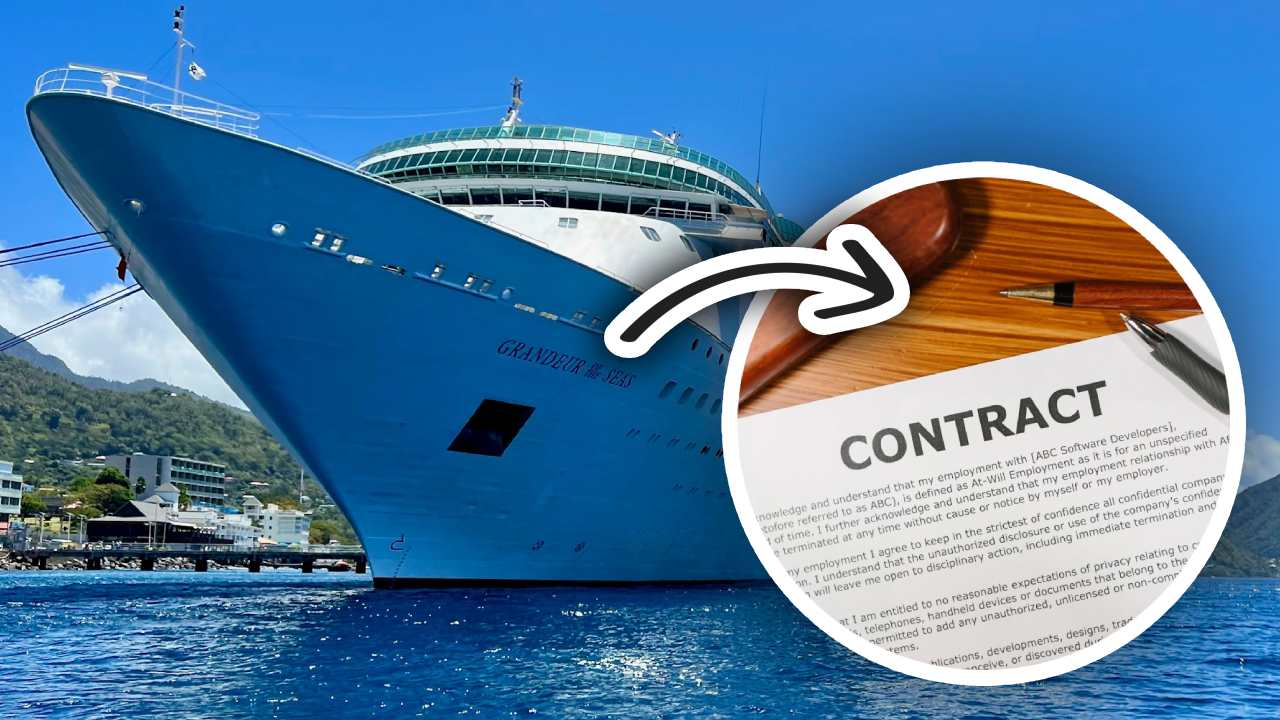
Royal Caribbean’s strict rules are not the shocking part. Most cruisers know that things like smoking on balconies, sneaking in alcohol, and certain electrical devices are banned. What many passengers don’t know is how much they actually agree to before the ship leaves port.
That agreement can touch places most people assume are private and personal: a suitcase, your cabin, or your belongings. A Royal Caribbean cruise contract can even affect a family reservation, a shore excursion, and the loyalty status you’ve built over the years. None of that sounds dramatic until security is at your door, asking to take a look inside.
Some cruisers call them common sense. Others may read them twice and quietly think, wait, really?
Your Cabin Feels Private, Until Security Has a Reason to Look

A delayed suitcase doesn’t always feel suspicious at first. Embarkation day can be chaotic. Bags arrive in batches, hallways clog with luggage, and someone always ends up at dinner in their travel clothes because their suitcase is late.
But sometimes a missing bag is not just slow delivery. If something inside looks restricted or raises a safety or security concern, Royal Caribbean’s process can go further than many passengers expect.
That’s where fine print feels less theoretical. Many passengers don’t realize they’ve already given Royal Caribbean permission to do more than just scan luggage. In certain situations, that can include stateroom inspections, checking personal property, luggage, or even the guests themselves.
The thing to remember is that these aren’t random cabin raids. A cruise cabin still feels like your space. You unpack there, sleep there, relax there, and throw wet swimsuits over the chair like any other passenger. Issues arise only when crew members have reason to believe that safety, security, conduct, or prohibited items are involved.
Speak to most seasoned cruisers, and they’ll tell you they’ve never experienced an unannounced cabin inspection. But if it does happen, that relaxed vacation bubble tends to burst pretty quickly.
Prohibited Items Can Be Removed Without You Standing There

The delayed suitcase gets even more uncomfortable if it finally arrives looking like it’s been opened. Maybe the zipper pull or luggage lock looks damaged. Belongings aren’t arranged how you remember packing them. Then comes the realization that an item you packed is no longer there.
This is where the uneasy truth hits: Guest Services may simply explain that luggage screening is part of the process passengers accepted when booking.
Many cruisers picture a quick face-to-face conversation. Someone calls you over, points to the item, and gives you a chance to explain. Cruise screening does not always work that neatly.
A passenger may pack something they think is harmless because it worked fine on another vacation, or it was okay for checked luggage on the flight. Maybe a small travel iron. A surge-protected power strip. A tool. A bottle of liquor or another restricted item they forgot was in a side pocket. If it’s on the list of the cruise line’s banned items, it’s not going to make it to your cabin.
The smart move is simple: check Royal Caribbean’s prohibited-items list before packing. Remember, the suitcase may be yours, but the ship still has rules about what can be in it.
One Person’s Behavior Can Affect the Whole Travel Party

You might think your family reservation or group booking is safe as long as you personally follow the rules. You checked in properly. Packed sensibly. Acted responsibly on board. You’d think that if someone else in your group causes a problem, it stays with them, right? Wrong.
Royal Caribbean’s fine print doesn’t always make clear distinctions between individual passengers traveling together. In certain circumstances, enforcement can affect other guests booked under the same reservation, not just the guest who caused the problem.
It doesn’t mean that one rude comment or small mistake gets an entire family kicked off a cruise ship. But if a serious conduct issue becomes a safety, security, or behavior problem, the consequences may affect the whole travel party.
That’s the part that can come as a shock to some cruisers. A grandparent who booked the trip, a spouse sharing the cabin, or a group of friends on the same reservation may suddenly find themselves part of something they never started.
One passenger’s behavior may not stay one passenger’s problem.
Getting Put Off the Ship May Not Come With Money Back

The thought of getting removed from a cruise ship already sounds like a vacation nightmare. One minute, someone is involved in a brawl or putting their own or another guest’s life in danger. Next, the ship is no longer the problem. Getting home is.
That’s the part some passengers don’t think through when they get involved in unruly or dangerous behavior. The fine print says that guests may be denied boarding or removed from the ship for failing to follow policies or instructions. In those cases, passengers may not be entitled to a refund or compensation.
And the money side can just make matters worse. Someone removed from the ship because of a policy violation is responsible for their own flights, hotel, transfers, and anything else needed to get home.
That probably sounds fair to cruisers who have watched one passenger ruin a sailing for everyone nearby. Ships need rules with consequences, especially when safety and security are involved.
But for the person standing at the port as the ship sails off, it feels brutally real. The fare is gone. The cruise is over. Future sailing restrictions may also follow in serious cases. And the fine print is no longer something nobody reads before booking.
Your Crown & Anchor Status May Not Be as Safe as You Think

Loyalty status on Royal Caribbean is something that cruisers “work” hard for. Getting Emerald, Diamond, Diamond Plus, or Pinnacle Club doesn’t come about by accident. It takes many sailings, money, time off work, flights, hotels, and years of choosing Royal Caribbean again and again.
It would be easy to think that loyalty was a two-way thing. But under certain conditions, the cruise line can suspend Crown & Anchor benefits or demote a loyalty tier.
It doesn’t mean Royal Caribbean is casually stripping status. This is tied to serious policy, conduct, payment, or loyalty-program issues, not ordinary cruise behavior. But for loyal cruisers, losing perks and status would sting badly after years of sailings and hard-earned cash.
Booked Through Royal Doesn’t Always Mean Run by Royal

Many cruisers book shore excursions through Royal Caribbean because it feels safer. It’s there in the app. The meeting time looks official. The ticket has the cruise line’s name on it. And many cruisers have heard that booking through the cruise line gives them more backup if the tour runs late.
But look closely at the booking language, and you’ll see that not all tours booked through the cruise line are protected equally. Many shore excursions, tours, hotels, attractions, and restaurants may be handled by independent contractors, even when sold through Royal Caribbean.
It doesn’t mean Royal Caribbean excursions are a bad idea. For many cruisers, they are still the simplest and most comfortable option, especially in unfamiliar ports. But it pays to read the actual wording in the booking contract to see what you are covered for and what you are not, if something goes wrong on the tour.
For example: if an official tour runs late, Royal Caribbean’s terms say that, in the unlikely event of a significant tour delay, arrangements will be made to return guests to the ship at the earliest opportunity. But that protection does not mean Royal Caribbean is operating every tour itself or accepting responsibility for everything that happens during it.
The surprise for many passengers is the responsibility gap. Many assume that “booked through Royal” means “run by Royal.” But the contract language is more nuanced than that.
“My Travel Agent Told Me” May Not Settle It

Booking a cruise through a travel agent is often a good idea. Travel agents can often spot better cabins, explain packages, watch prices, and handle changes. They also have access to special Royal Caribbean deals and can organize hotels, flights, and transfers. Seems perfect… until something unexpected happens.
The comfort of using a travel agent can lead to a risky assumption. If the agent explains it wrong or makes a mistake, passengers may expect Royal Caribbean to resolve the issue. But the fine print may not make that mistake Royal Caribbean’s responsibility.
Read closely, and the booking contract suggests the travel agent is the passenger’s agent, not an official Royal Caribbean representative. That means what an agent promises, forgets, or misunderstands may not automatically become the cruise line’s responsibility. You’d usually have to get the travel agent to resolve any issues.
That’s not to say travel agents aren’t worth it. A sharp agent can be worth every cent, especially for families, groups, complicated itineraries, or someone with accessibility needs. Still, saying at Guest Services, “But my travel agent told me,” isn’t usually going to get you far.
The Person Who Clicks “Book” May Speak for Everyone

You might think that the lead guest is just the person who handled the admin side. They picked the cabins, paid the deposit, added the names, and sent everyone’s balance due date. But, in the cruise line’s eyes, their responsibility is more than just admin.
Read closely, and you’ll discover that Royal Caribbean’s fine print gives the lead guest’s role more weight. It’s expected that they have read, understood, and agreed to the terms on behalf of everyone named in the booking. That can make one person’s click apply to everyone named in the booking.
This isn’t usually a big issue until something goes wrong. Then everyone may start looking at the lead guest for answers. After all, they aren’t just the organizer. They are the one who agreed on the terms for everyone else.
Your Kid’s Bad Moment Can Become an Adult Problem Fast

Seasoned cruisers will tell you that sailing on school breaks can be a noisy experience. Teens test boundaries. On a ship, that can mean hallway races, elevator button games, late-night roaming, pool-deck dares, or acting brave because parents are two decks away and the vacation mood has taken over.
While it might be easy to blame the kids, Royal Caribbean generally takes a different view. That’s when the problem shifts from “kids being kids” to parents being called in.
Crew may issue a warning first, but if the behavior continues, parents or guardians could face consequences ranging from loss of privileges to being held responsible for costs or penalties tied to the incident. In serious cases, removal from the ship may also be possible.
Royal Caribbean’s published conduct policy puts responsibility for minors and young adults on parents and guardians, even when the adults are not physically with them. Ship management also reserves the right to enact curfews when needed for safety or security.
On many Royal Caribbean sailings, passengers report that guests 17 and under are expected to be back in their staterooms by 1 a.m., unless they are with a parent or guardian or participating in an approved activity.
A teen may start the problem in a hallway or elevator, but the parent may be the one answering for it at Guest Services.
The Port That Sold the Cruise May Not Be the Port You Get

Some passengers book for the ship. Others book because of the port. A beach day at CocoCay, a bucket-list island, a family excursion, or a once-in-a-lifetime itinerary. They’re not just buying a cruise—they’re buying a dream vacation.
But here’s the thing. Cruise itineraries aren’t carved in stone. Royal Caribbean has written port flexibility into its terms and conditions. The captain can change destinations, timing, or activities in certain locations. Weather, safety issues, port conditions, or operational problems can all change what actually happens.
While missing a dream port stings, what can hurt even more is that compensation may be limited, and the contract gives Royal Caribbean broad flexibility when changes are needed. Some passengers resign themselves to the fact that this is a normal part of cruising. Others feel the port that sold the cruise should carry more weight.
Most Royal Caribbean passengers will never run into these rules. That’s why they’re easy to ignore until a bag is searched or there’s an unexpected knock at the door.
Some cruisers say these rules are exactly what cruise ships need. Others will say passengers agree to more control than they realize. Which Royal Caribbean rule is long overdue, and which one goes too far?
Related Articles:
